GIOTTO E LA CAPPELLA DEGLI SCROVEGNI
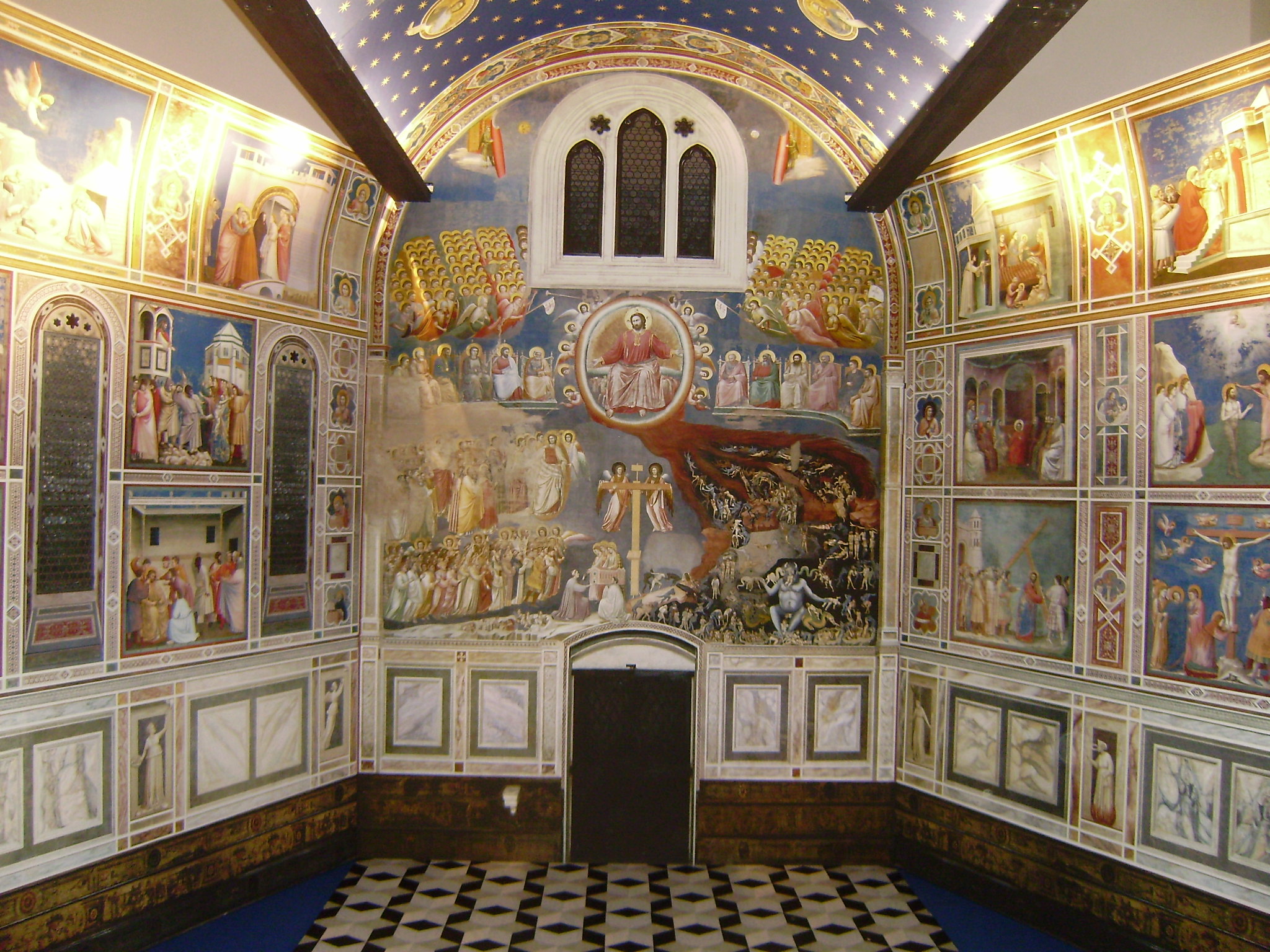
La Cappella degli Scrovegni di Padova, affrescata tra il 1303 e il 1305 da Giotto su incarico di Enrico degli Scrovegni, costituisce uno dei massimi capolavori della storia della pittura e, soprattutto, il metro di paragone per tutte le opere di dubbia attribuzione giottesca, visto che, grazie alla firma autografa ivi presente, non esistono dubbi sulla sua attribuzione. La narrazione ricopre interamente le pareti con le storie della Vergine e di Cristo, mentre nella controfacciata è dipinto il grandioso Giudizio Universale. In questi affreschi, la pittura di Giotto dimostra una piena maturità espressiva, e rivela la ricerca di una pittura capace di rendere l’umanità dei personaggi sacri. Tra i brani più suggestivi ci sono gli ambienti naturali e le architetture, costruite come vere e proprie scatole prospettiche.
GIOTTO AND THE SCROVEGNI CHAPEL
The Scrovegni Chapel in Padua, frescoed between 1303 and 1305 by Giotto on commission by Enrico degli Scrovegni, is considered one of the greatest masterpieces of Western art and is, above all, the basis for comparison for all works of unclear authorship in the Giotto style, as, thanks to the signature present in the piece, there is no doubt regarding its authorship. The fresco completely covers the walls of the chapel with the story of the Virgin Mary and Jesus Christ, while the counter-facade represents the Judgment Day. The frescoes reveal the full expressive maturity of Giotto’s painting, as well as his quest for a style capable of representing the humanity of these religious figures. The natural environment and the architecture are among the most suggestive elements, created as true perspective boxes.